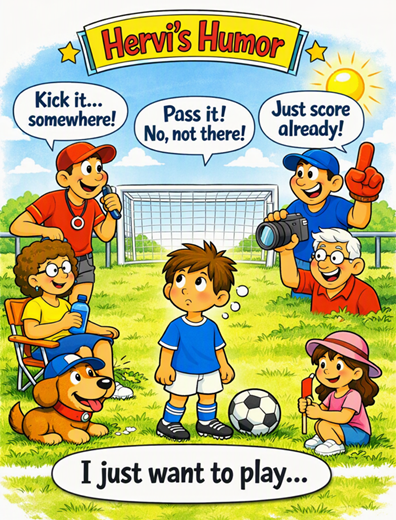
I recently came across an image that perfectly illustrates a challenge we face in youth soccer: the overwhelming amount of verbal input children receive during a game. A young player stands on the field trying to make a decision, while a chorus of adult voices shouts instructions from every direction.
To adults, these commands may feel helpful. To a child, they can feel chaotic, contradictory, and emotionally heavy.
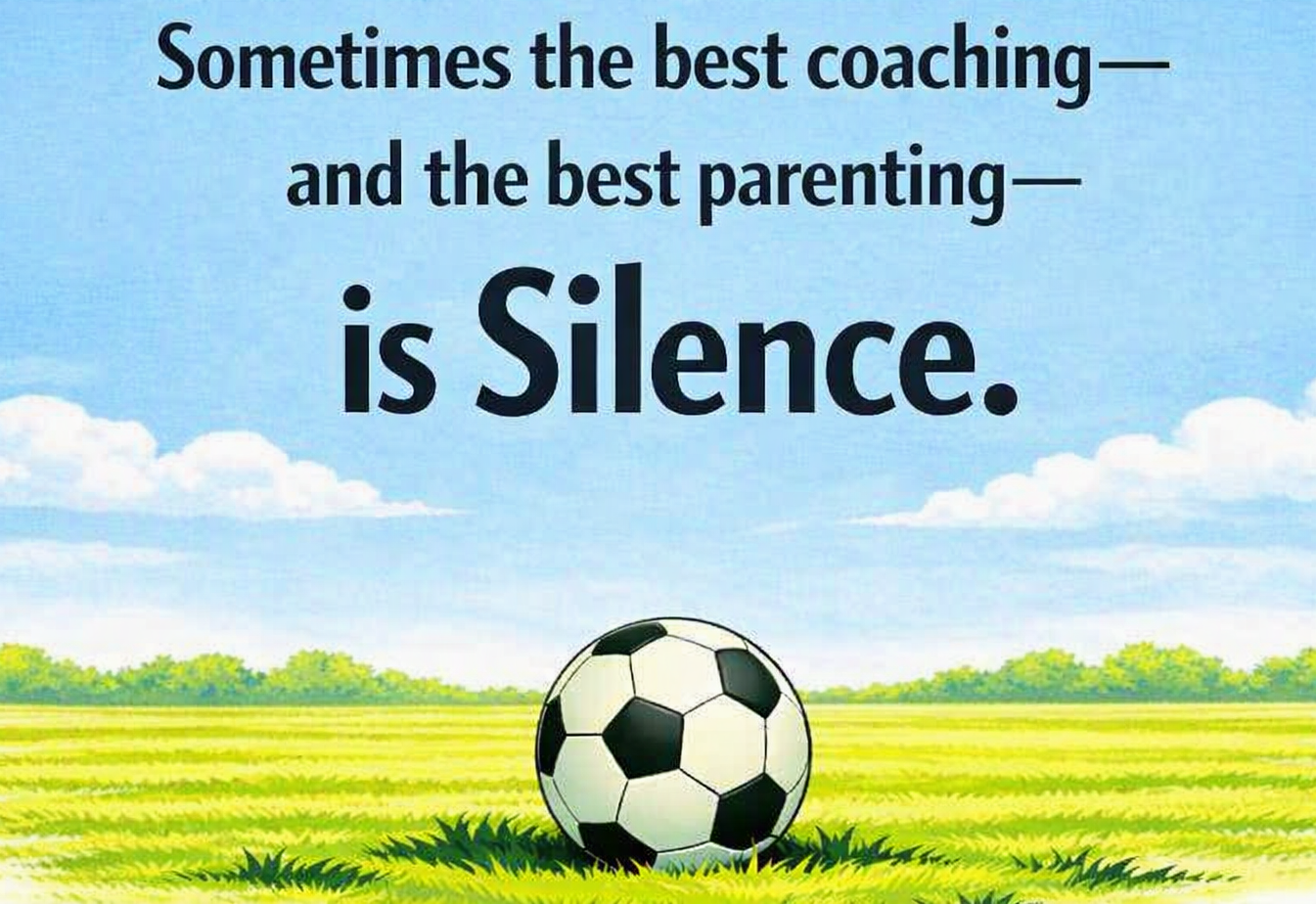
To improve the game-day environment, we must look honestly at the roles of both coaches and parents.
For Coaches:
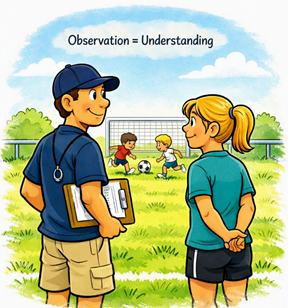
Lead with Observation, Not Volume
On game day, our job is not to coach every moment. It’s to observe, take notes, and guide with intention.
When we shout constant instructions, we unintentionally:
- Replace the child’s decision-making with our own
- Create hesitation instead of confidence
- Add pressure instead of clarity
A more effective approach is simple:
Observe the first half. Take notes. Save your coaching for halftime.
This allows players to:
- Make their own choices
- Learn from mistakes
- Develop game awareness
- Build confidence in real time
During the second half, shift your focus to planning future training sessions. Patterns you see in the game often reveal what needs attention in practice.
Practice is TEACHING. Game day is TESTING. Let the children PLAY in both!

For Parents:
Support Through Calm, Not Commands
Parents play a crucial role in shaping the emotional environment of the game. But when the sideline becomes a second coaching staff, children feel pulled in multiple directions.
Instead of shouting instructions, consider a different approach:
Bring a chair. Sit back. Observe. Relax. Cheer for effort.
Your calm presence communicates:
- “I trust you.”
- “I’m proud of you.”
- “This is your game, not mine.”
Children perform better when they feel supported, not directed. They stay composed when the adults around them stay composed. They enjoy the game more when the sideline energy is positive and steady.
The most powerful thing a parent can do on game day is simply be there — quietly, confidently, and encouragingly.
A Shared Responsibility
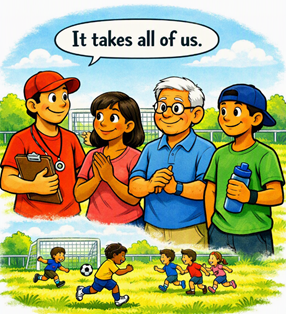
Coaches and parents both want the same thing: children who grow, learn, and love the game.
To achieve that, we must protect their space to think, decide, and play freely.
On game day, the field belongs to the children. Our voices should never drown out their opportunity to learn.